James Lester

Professor
Department of Computer Science
North Carolina State University

E-mail: lester AT ncsu.edu
Phone: 919.515.7534
Fax: 919.515.7925

Address:
Department of Computer Science
North Carolina State University
Engineering Building II
890 Oval Drive
Raleigh, NC 27695-8206
U.S.A.

Research Areas

Artificial intelligence, intelligent tutoring systems, computational linguistics, intelligent user interfaces

Research Interests

I’m keenly interested in devising intelligent computational systems that can adaptively support human-computer interaction and communication. For many years I’ve also had a long-standing interest in applying basic AI research on computational linguistics and intelligent user interfaces to educational software. For example, my students and I have investigated issues in animated pedagogical agents, explanation generation (both natural language and multimodal), virtual cinematography, and narrative prose generation. For more information, please visit the IntelliMedia Group website.

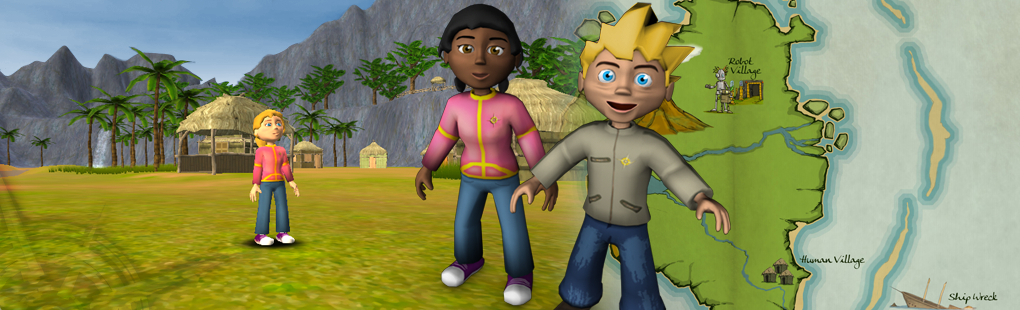
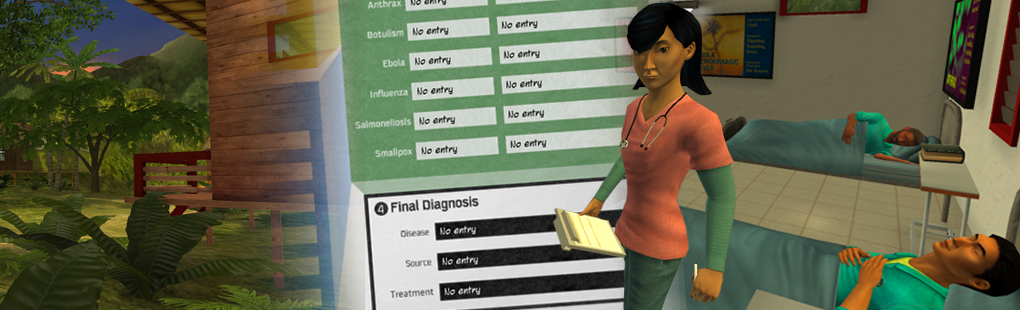
In collaboration with colleagues from NC State’s William and Ida Friday Institute for Educational Innovation, for several years now our work has focused on advanced learning technologies with an emphasis on intelligent tutoring systems, game-based learning environments, and tutorial dialogue. We’re investigating narrative-centered learning environments (interactive narrative planning, character dialogue generation), affective computing (self-efficacy modeling, frustration detection, empathetic virtual agents), student modeling (goal recognition, plan recognition), and natural language tutorial dialogue (corpus-based dialogue studies, tutorial strategy modeling). We’re currently embarking on a new project to study the role of multiple representations in creativity via the Narrative Theatre, a narrative-centered creativity enhancement environment.

Awards and Honors

  • NSF CAREER Award, National Science Foundation.
  • Best Paper Awards
    • Best Paper Award, Seventh International Conference on Artificial Intelligence and Interactive Digital Entertainment, Palo Alto, 2011.
    • Best Student Paper Award, International Conference on Affective Computing & Intelligent Interaction, Amsterdam, 2009.
    • Best Student Paper Award, Thirteenth International Conference on AI in Education, Marina del Rey, 2007.
    • Outstanding Paper Award, Twelfth World Conference on Educational Multimedia, Hypermedia, & Telecommunications, Montreal, 2000.
    • Best Paper Award, International Conference on Intelligent User Interfaces, Los Angeles, 1999.
    • Best Paper Award, Eighth World Conference on Artificial Intelligence in Education, Kobe, Japan, 1997.
  • ACM Recognition of Service Award, 1999.
  • Teaching
    • Member, North Carolina State University Academy of Outstanding Teachers.
    • Outstanding New Teacher Award, Dept. of Computer Science, NC State, 1995.
  • Graduated with Highest Honors, University of Texas at Austin, 1986.
  • Member: Phi Beta Kappa, Phi Kappa Phi, Upsilon Pi Epsilon.

Professional Service

  • Editor-In-Chief, International Journal of Artificial Intelligence in Education, 2009-2015.
  • Natural Sciences and Engineering Research Council of Canada, Computer Science Evaluation Group, 2010-2013.
  • Steering Committee, IEEE Transactions on Affective Computing, 2009-2012.
  • Steering Committee, International Conference on Intelligent Tutoring Systems, 2004-2012.
  • Program Co-Chair, Fourth International Conference on Interactive Digital Storytelling (ICIDS-2011), 2011.
  • Chair, Virtual Agents Track, Tenth International Conference on Autonomous Agents and Multiagent Systems (AAMAS-2011), 2011.
  • Conference Co-Chair, Eighth International Conference on Intelligent Virtual Agents (IVA-2008), 2008.
  • Executive Committee, HUMAINE Association (Association for Affective Computing), 2007-2009.
  • Editorial Board, Autonomous Agents and Multi-Agent Systems, 1999-2007.
  • Editorial Board, Metacognition and Learning, 2012-present.
  • Guest Editor, International Journal of Artificial Intelligence in Education, 2006.
  • Program Chair, Seventh International Conference on Intelligent Tutoring Systems (ITS-2004), 2004.
  • Program Chair, ACM International Conference on Intelligent User Interfaces (IUI-2001), 2001.
  • Program Committees:
    • National Conference on Artificial Intelligence: AAAI-97, AAAI-98, AAAI-00 (Senior Program Committee), AAAI-04 (Senior Program Committee), AAAI-06 (Senior Program Committee), AAAI-07 (Senior Program Committee), AAAI-10, AAAI-11.
    • International Joint Conference on Artificial Intelligence: IJCAI-09.
    • International Joint Conference on Autonomous Agents & Multi-Agent Systems: AAMAS-02, AAMAS-03, AAMAS-06, AAMAS-07, AAMAS-08, AAMAS-09, AAMAS-10 (Senior Program Committee - Virtual Agents Track), AAMAS-12 (Senior Program Committee).
    • International Conference on Autonomous Agents: Agents-97, Agents-98, Agents-99, Agents-00, Agents-01 (Senior Program Committee).
    • International Conference on Intelligent Tutoring Systems: ITS-2000, ITS-02, ITS-08 (Senior Program Committee), ITS-10 (Senior Program Committee), ITS-12 (Senior Program Committee).
    • International Working Conference on Intelligent Virtual Agents: IVA-05, IVA-06, IVA-07, IVA-09, IA-10, IVA-11.
    • Annual Meeting of the Association for Computational Linguistics: ACL-12.
    • Annual Meeting of the Special Interest Group on Discourse and Dialogue: SIGDIAL-09, SIGDIAL-10.
    • International Conference on User Modeling, Adaptation, and Personalization: UMAP-10, UMAP-11, UMAP-12.
    • International Conference on Natural Language Generation: INLG-00, INLG-08, INLG-10.
    • Conference on Empirical Methods in Natural Language Processing: EMNLP-2010.
    • Conference on Artificial Intelligence and Interactive Digital Entertainment: AIIDE-11.
    • International Conference on Affective Computing and Intelligent Interaction: ACII-11.
    • International Conference on Artificial Intelligence in Education: AIED-05, AIED-07, AIED-11 (Senior Program Committee).
    • International Conference on Knowledge Capture: K-CAP-09, K-CAP-11.
    • ACM International Conference on Intelligent User Interfaces: IUI-98, IUI-99, IUI-02, IUI-03, IUI-04, IUI-05, IUI-06 (Meta-Reviewer), IUI-07, IUI-09, IUI-10, IUI-11, IUI-12 (Associate Chair).
  • Editor, AI Magazine Special Issue on Intelligent User Interfaces, 2001.

Courses

  • Introduction to Programming (CSC 116): fall 2005, spring 2006, spring 2007, spring 2008.
  • Programming Concepts (CSC 210): fall 1996.
  • Data Structures for Computer Scientists (CSC 316): fall 2004, spring 2006.
  • Introduction to Artificial Intelligence (CSC 411): spring 1997, spring 1999, spring 2004, summer 2006, summer 2007.
  • Artificial Intelligence I (CSC 520): fall 1994, fall 1995, fall 1997, fall 1998, fall 1999, fall 2005, fall 2006, fall 2007, fall 2009.
  • Multimedia Interface Design (CSC 591D): fall 1995.
  • Knowledge-Based Learning Environments (CSC591 E): fall 1995, fall 1996.
  • Intelligent Multimedia Systems (CSC 725): fall 1994, spring 1998, spring 2001, spring 2005.
  • Natural Language Processing (CSC 791T): fall 2006, fall 2008.
  • Natural Language Dialogue Systems (CSC 791J): fall 2007.
  • Intelligent Game-Based Learning Environments (CSC591): fall 2010.

Bio

After earning a B.A. in History from Baylor University in 1983, I headed (slightly) south and earned a B.A. in 1986 and an M.S.C.S. in 1988, both in Computer Science, from the University of Texas at Austin. Despite spending an inordinate amount of time at the Texas Juggling Society, UT Austin nevertheless saw fit to award me a Ph.D. in Computer Science in 1994. My research focused on a natural language generator (KNIGHT) that dynamically generated multi-paragraph explanations from a large-scale knowledge base. After a dissertation’s worth of work, it was satisfying when, in a formal evaluation, KNIGHT’s performance was judged to be comparable to humans’.

Moments after receiving the Ph.D., I joined the Department of Computer Science at NC State where I’ve served on the faculty ever since. It’s been great fun working with wonderful colleagues and students on a number of projects in computational linguistics and intelligent user interfaces over the years. These include intelligent tutoring systems with pedagogical agents (Design-a-Plant, Internet Protocol Advisor), multimedia explanation generation and pedagogical planning (PhysViz), legal document generation (Docu-Planner), narrative prose generation (Author), narrative-centered learning environments (Crystal Island, Narrative Theatre), and natural language tutorial dialogue (JavaTutor).

Beginning in 2001, I took a multi-year sojourn to industry to experience first-hand the beguiling practicalities of real-world problems. NC State colleagues accompanied me in founding LiveWire Logic, a venture-backed enterprise software start-up. At LiveWire Logic, where I served as Chief Scientist, we leveraged corpus-based computational linguistics techniques to create RealDialog™, an automated customer service solution for Fortune 500 companies. LiveWire Logic was acquired by Astute Solutions in 2006.

Colleagues, students, and I have long been engaged in a concerted effort to design and evaluate next generation learning technologies ranging from intelligent tutoring systems to natural language tutorial dialogue systems and intelligent user interfaces. We are particularly interested in devising learning environments that integrate artificial intelligence and commercial game engines. Our learning environments use AI computational frameworks to create the most effective, efficient, and engaging learning interactions for all learners, both within and outside of the classroom. To this end, we are equally interested in research (with a focus on creating new learning technologies), development (with a focus on building robust learning technologies that are deployed in school systems and informal learning settings), and evaluation (with a focus on testing learning technologies to determine precisely which technologies under which conditions provide the greatest learning gains and deepest, most engaging learning experiences).

Professional Experience

CV

Professional Bio